The King's Game: Through the Veil
The King's Game is a 3D chess game where the pieces are concealed from your opponent. with two game modes; standard two-player chess and a circular board three-player chess variant. All across multiple atmospheric 3D environments.


このゲームについて
The King's Game: Through the Veil
Chess has always assumed both players deserve to know everything. Now it is played in the dark, against an opponent who is equally lost.
Every piece on the board is hidden until your forces have eyes on it. The moment you lose line of sight, it disappears back into shadow. You are not playing against a system that knows where everything is. It genuinely does not know where your pieces are until it finds them. Your opening moves are an assumption. Your midgame is a deduction. Your endgame is a hunt.
This is chess stripped of its certainty. Every decision carries weight it never had before.
Two game modes across three atmospheric 3D environments:
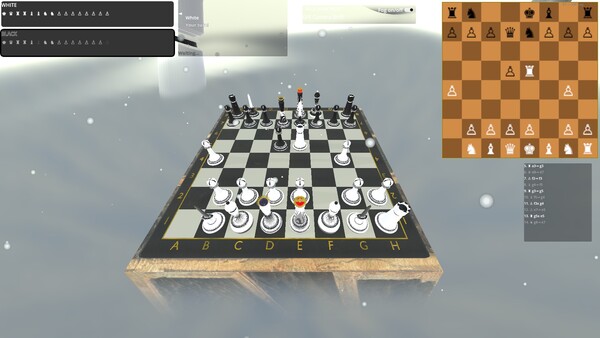
David's Duel — Standard chess. Classical board, classical rules, classical piece layout. Everything you know about chess still applies. The difference is you can only act on what you can see. Play against AI or a friend online across cave, winter, and desert environments.
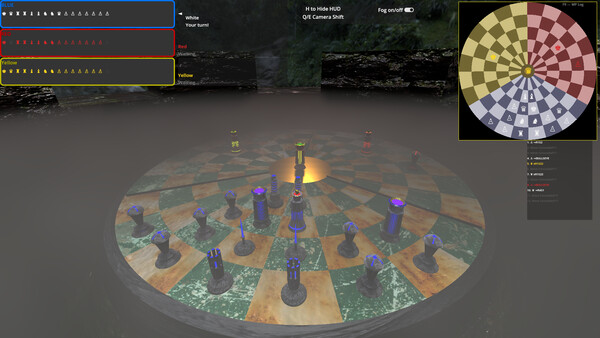
The Council — Three families. One circular board. Pawn promotion is in the center of the board.
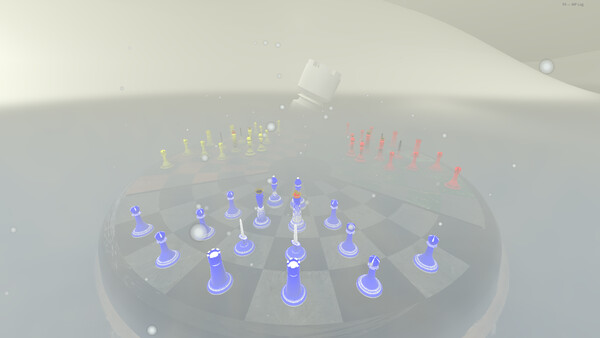
The Council draws from Byzantine Circle Chess, a variant with roots dating to the 6th century. The board is circular — five rings of 24 segments each, converging on a single bullseye at the center. Pawn promotion happens there. Three families — White, Yellow, and Red — occupy equal sections of the outer ring and advance inward toward the same center point.
Movement adapts to the geometry. Rooks and queens travel radially between rings or circumferentially around them. Bishops move diagonally — one ring, one segment. Knights keep their L-shape, adapted to the ring and segment grid. Pawns advance inward. When an eliminated family's king falls, their remaining pieces stay on the board as neutral obstacles. The board does not clear. It gets more dangerous.
THE AI
The AI was written from scratch specifically for fog of war. It was not adapted from an existing engine. Existing chess engines assume perfect information — they cannot operate under fog conditions by design.
The AI maintains a belief board. It knows where your pieces started. It updates what it can see each turn. Squares it cannot see retain their last known state. It is reasoning from incomplete information the same way you are. It is not cheating. The rules do not allow it to.
Three difficulty levels:
Three difficulty levels from playing as a Peasant with a cunning plan, a noble Knight, to a ruthless Emperor.
Peasant — tactical scoring with light randomness; captures, center control, check threats; competent but planless
Knight — minimax depth 2 with positional tables; has a plan and pursues it.
Emperor — same depth as Knight but with phase-weighted objectives; adapts by game phase, castles before attacking, king activates in endgame
Key Features:
Full fog-of-war visibility system — see only what your pieces can see, AI operates on starting piece location assumptions and updates based on player movement, Player pieces are also concealed.
Three modes of play: All but Kings only are hidden (The Veil), All pieces hidden (Abyss) , and All Revealed (Apokalypsis) for classic play.
David's Duel — standard 8x8 board, with standard chess rules wrapped in darkness
The Council — New custom 3-King circular chess on a circular board, pawn can move in multiple directions
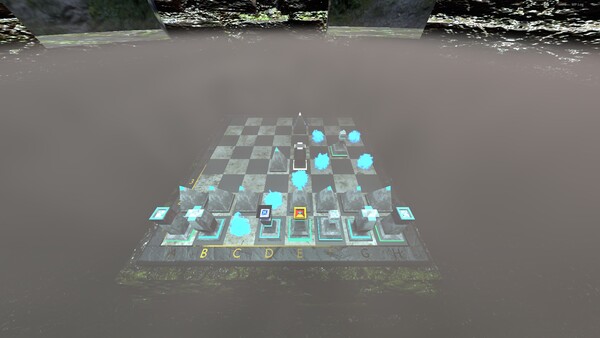
Cave, Winter, and Desert environments
AI opponents at three difficulty levels
Online multiplayer
Online observer. Watch the board unfold with clear vision, watching the game unfold.
Ghost piece preview system for navigating fog-covered squares